Tugger Trains
Tugger Trains
A system that turns single forklift movements into a fixed-route run. The standard solution for production supply.
- Milk run
- Fixed route
- Multiple stations
- Full out, empty back
- Automated option
A system, not a truck
A tugger train is a material transport system made up of a tow tractor and the trailers coupled behind it, running on a fixed route at fixed intervals. On a single run it drops material at several stations and collects the empty containers on the way back.
Its purpose is not speed but rhythm. If the production line receives material too early, the line side gets congested; too late, and the line stops. A tugger train is set up to manage both risks at once.
- One run, many stops: Several forklift movements are combined into a single run.
- Full out, empty back: Collecting empty containers is built into the same run.
- Less traffic: Fewer trucks in the production area, and therefore lower accident risk.

Which plants it suits
Series Production Lines
Production lines with predictable consumption and more than one station.
Automotive and White Goods
Plants that feed frequently and need to keep line-side stock low.
Large Warehouses
Warehouses with long internal distances and a high number of stops.
Campus Sites
Sites with a regular material flow between several buildings.
Which steps of the chain it covers
The main area for a tugger train is production supply; it is also used in dispatch preparation and on picking runs.
The four decisions that build the system
In tugger train projects the choice of truck is the last step; the run itself is designed first.
Route and Stops
The order of the stations and the length of the run are set from the consumption data. In practice the tightest turn limits the number of trailers.
Run Frequency
How often the run is made decides directly how much stock is held at the line side.
Trailer Type
A LiftRunner, trailer or purpose-built trolley system is chosen to match your container and pallet dimensions.
Automated or Operator Driven
If the route is genuinely fixed and obstacle traffic is low, automated is a good fit; on a variable route an operator-driven system is still more flexible.
The parts of a tugger train system
A tugger train is not a truck but a system: tow tractor, trailer, load trolley and run plan all work together.

LiftRunner
A trailer system that takes the container or pallet directly onto the trailer, with no transfer needed. The most widely used solution for line feeding applications.

BaseRunner / RackRunner
A trailer-based system; the rack or container sits directly on the trailer.

Load Trolleys
Transport trolleys configured to suit the station and the type of material.

Tugger Train Consultancy
Designing the route, the order of stops and the run frequency from the consumption data.
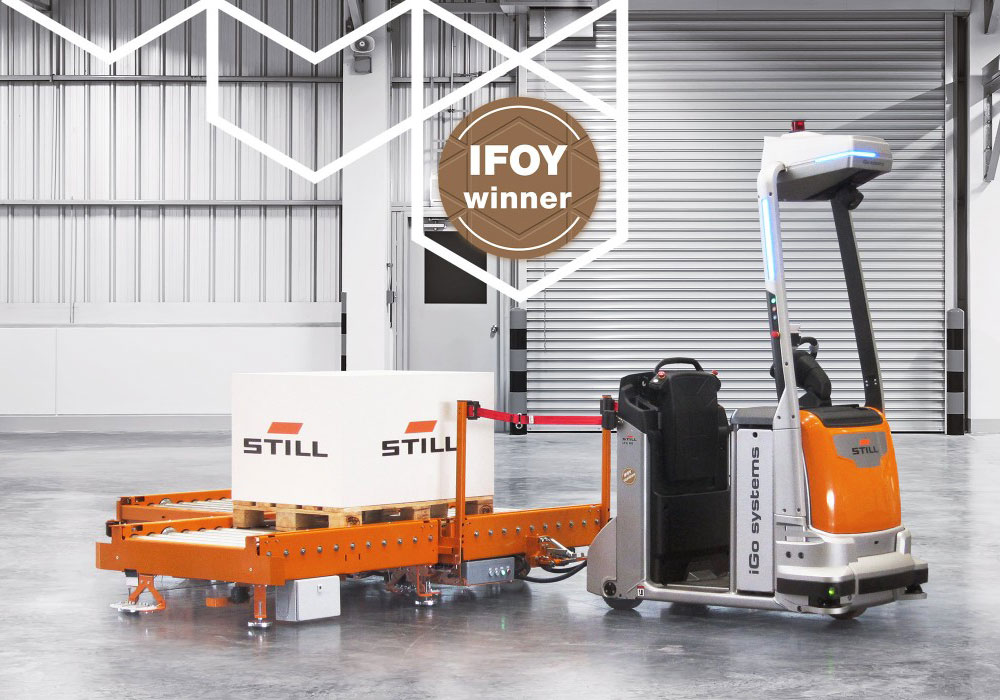
Automated Tugger Trains
Autonomous tugger train applications running without an operator on fixed, repeating routes.

Individual Products
Single solutions for special transport requirements that do not fit the standard system.
A tugger train investment is not right for every production operation. On lines with low volumes and irregular consumption, carrying on with single trucks can be more efficient; if the analysis shows that, we say so plainly.
The truck on its own is not the solution
The return on the investment depends on how well the truck fits your warehouse and your process. That is where we start.
Site Analysis
We do not recommend a truck before we have measured your aisles, racking, order profile and shift pattern.
Kartepe Workshop
Maintenance, repair and overhaul are carried out by our own technicians in our own workshop in Kartepe, an industrial region about an hour east of Istanbul.
Genuine Parts
Supply of STILL genuine spare parts and stock planning matched to your fleet.
Safety Integration
Collision avoidance, speed limiting and camera systems can be fitted to the truck at the same time.
Frequently asked questions about tugger trains
Is a tugger train right for us?
It suits production operations with steady consumption, more than one station and a route that can be fixed. On single-station lines or lines with very irregular consumption, carrying on with single trucks is usually more sensible — and if the analysis shows that, we say so plainly.
How many trailers can we tow?
Tractor capacity, trailer type, floor gradient and manoeuvring space decide it together. In practice the limit is usually set by the tightest turn on the route.
Does an automated tugger train make sense?
It makes sense on runs where the route is genuinely fixed and repeating and pedestrian traffic can be managed. On variable routes an operator-driven system stays more flexible. We also have projects where the two are used together on the same site.
Can we use our existing containers and trolleys?
Usually yes. The trailer system is chosen to match your container and pallet dimensions. If you have no container standard, we may need to recommend standardisation alongside the route design.
Can we run a pilot?
We can, and we recommend it. We set up a pilot run on a single route and measure it; if the result meets expectations, we roll the system out.
Let us design your line feeding run together
Tell us your number of stations, the length of your route and your hourly consumption; we will put together a run plan and a system recommendation.
Request a Quote