
Speed Limiting by Fork Height
Speed Limiting by Fork Height
The forks go up, the speed comes down. Intelligent protection that automatically limits travel speed as the load rises, cutting tip-over and load-drop risk at source.
- Three-stage speed map
- Smooth deceleration
- Diesel and electric compatible
- Plug-and-play
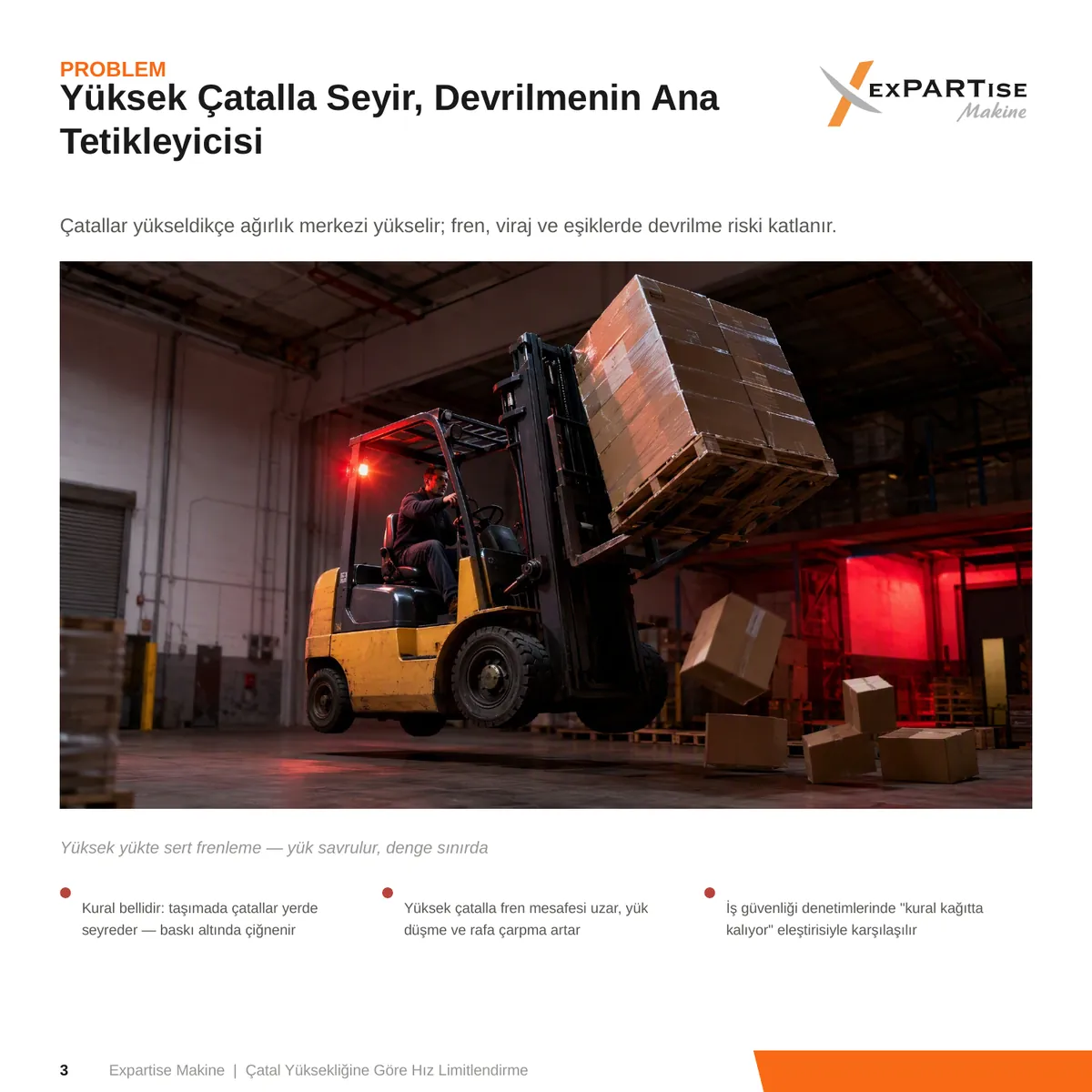
Travelling with raised forks is the main trigger for tip-overs
The rule is clear: forks must be kept close to the ground while travelling. But as the pace of work picks up, that rule is broken again and again.
As the forks rise, so does the centre of gravity: tip-over risk multiplies under braking, in turns and over thresholds, braking distances grow, and dropped loads and rack impacts become more frequent.
- Braking with raised forks: the load swings out and stability sits right on the edge.
- In audits: you meet the criticism that the rule only exists on paper.
- The solution: the rule is now enforced by the truck, not left to the operator.
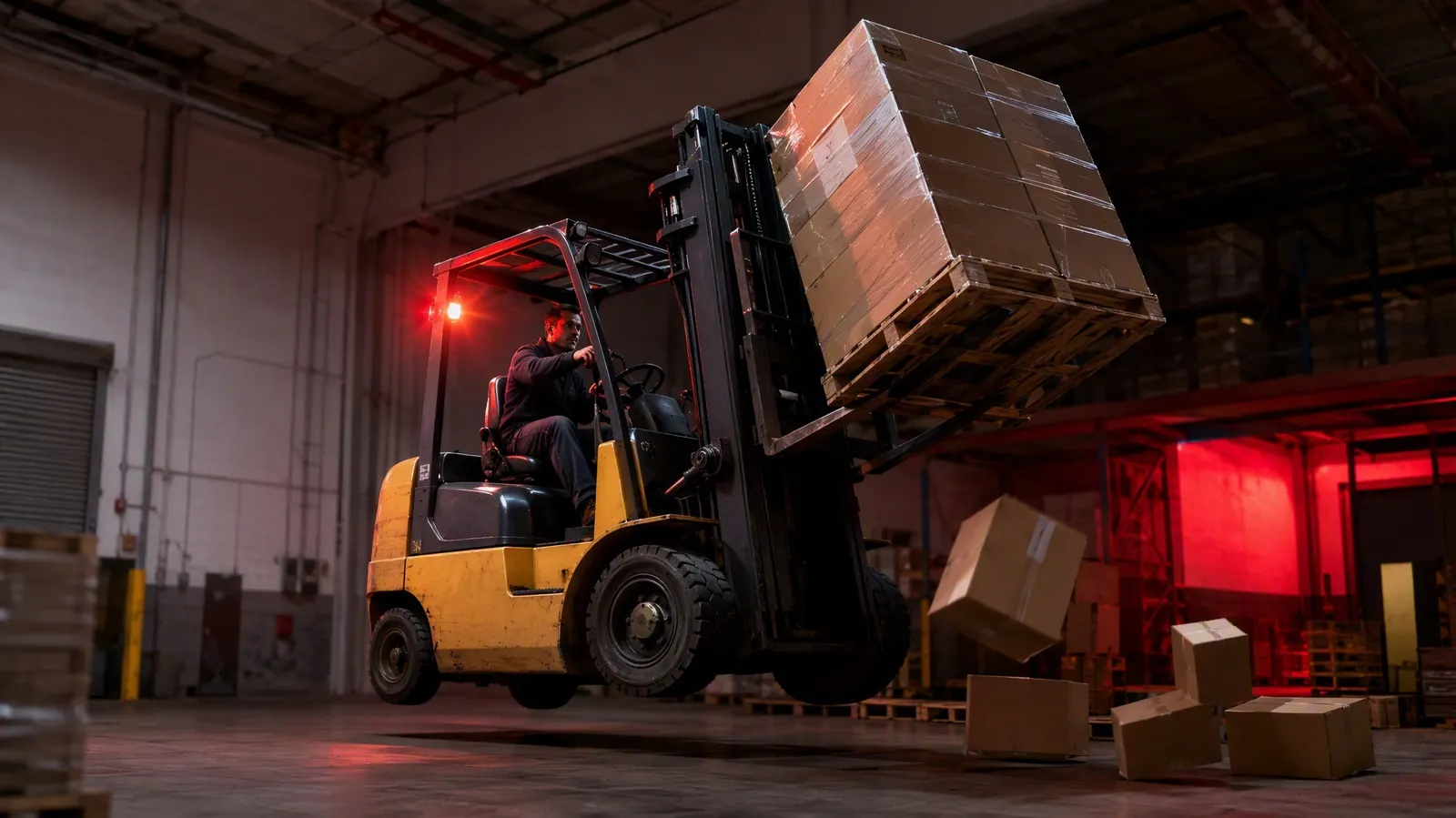
The rule belongs in the truck, not on a notice board
Training and warning signs are not enough on their own. The system applies the correct behaviour in the same way on every shift and with every operator.
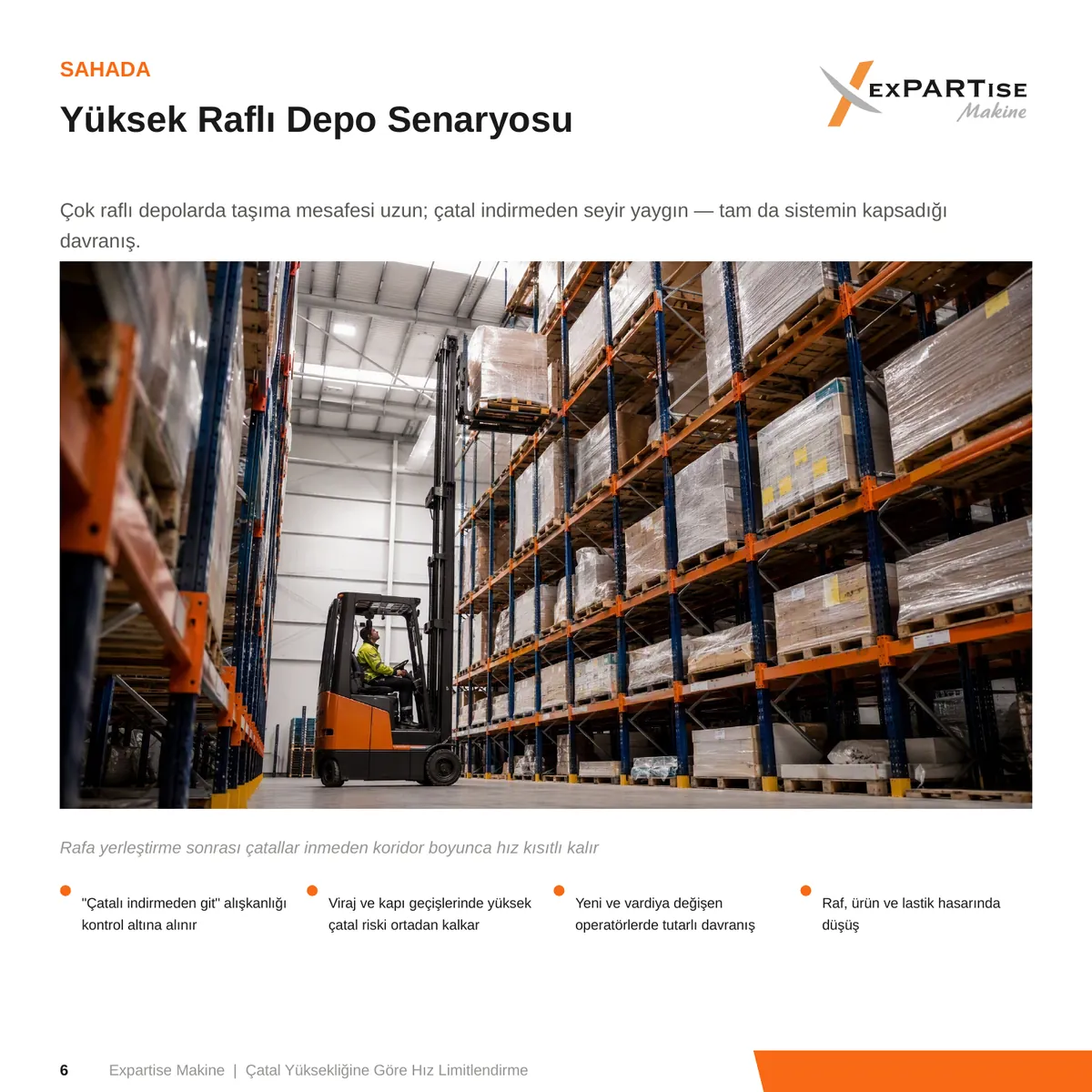
- The habit of driving off without lowering the forks.
- Raised forks through turns and doorways.
- Inconsistent behaviour from new operators and across shift changes.
- Damage to racking, goods and tyres.
- Fork height is measured continuously and the speed limit is applied automatically.
- Deceleration always follows a smooth ramp.
- Limits are set for each site using locked parameters.
- A staged audible warning keeps the operator informed.
Height–speed map
The control unit selects the speed limit matching the current fork height from the table and applies it.
0 – 30 cm · Full authority
The forks are low and the truck runs at the normal travel speed defined for the site.
30 cm – 2 m · Staged restriction
The speed limit drops, the throttle is eased back smoothly and the operator receives an audible warning.
2 m and above · Travel restricted
Forward travel speed falls to a minimum or is blocked; only the placement manoeuvre remains available.
Measure, decide, apply
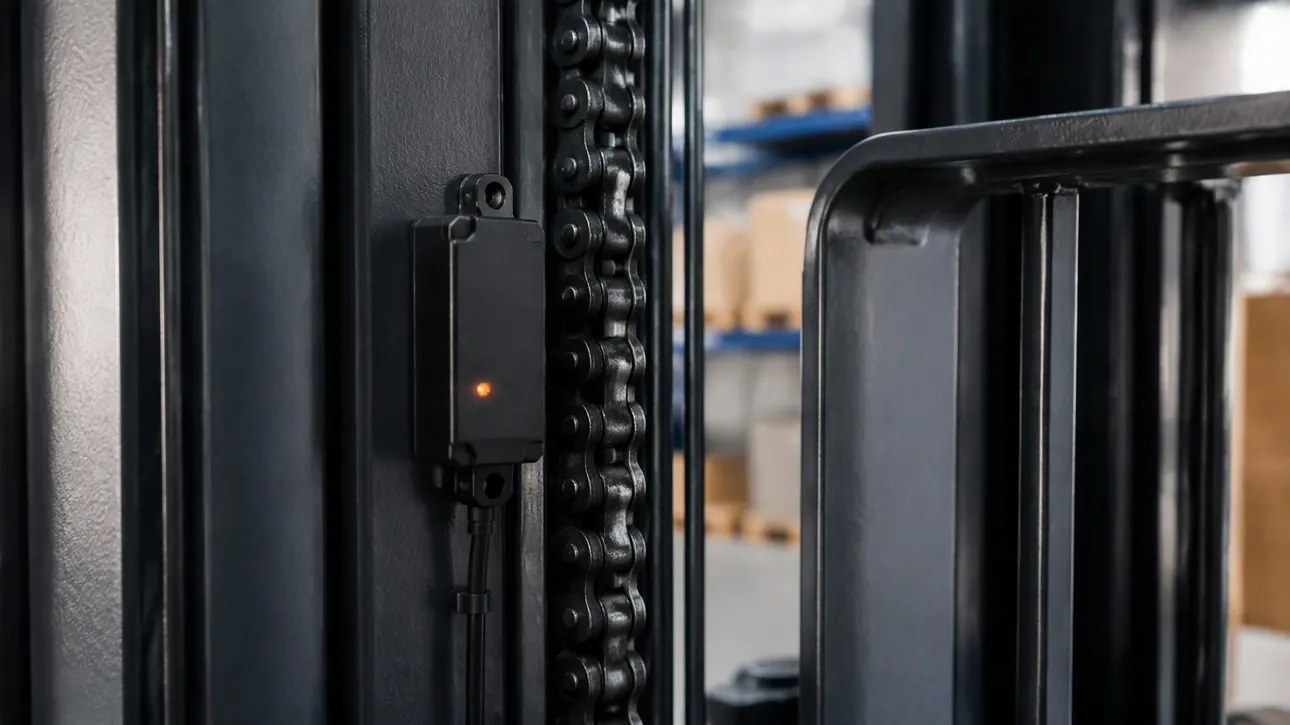
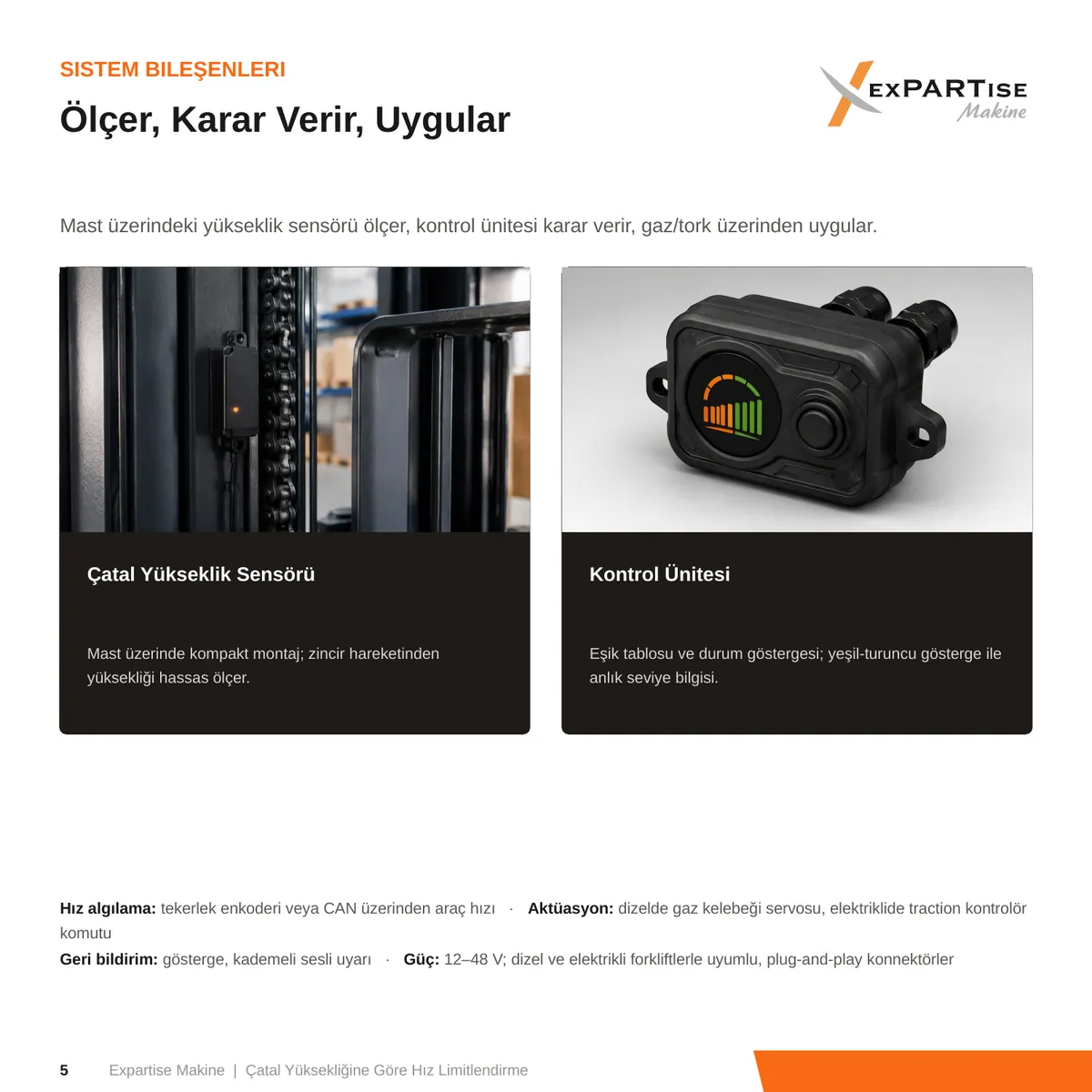
A height sensor on the mast measures, the control unit decides, and the limit is applied through throttle or torque.
Fork height sensor
Compact mounting on the mast; measures height precisely from the chain movement.
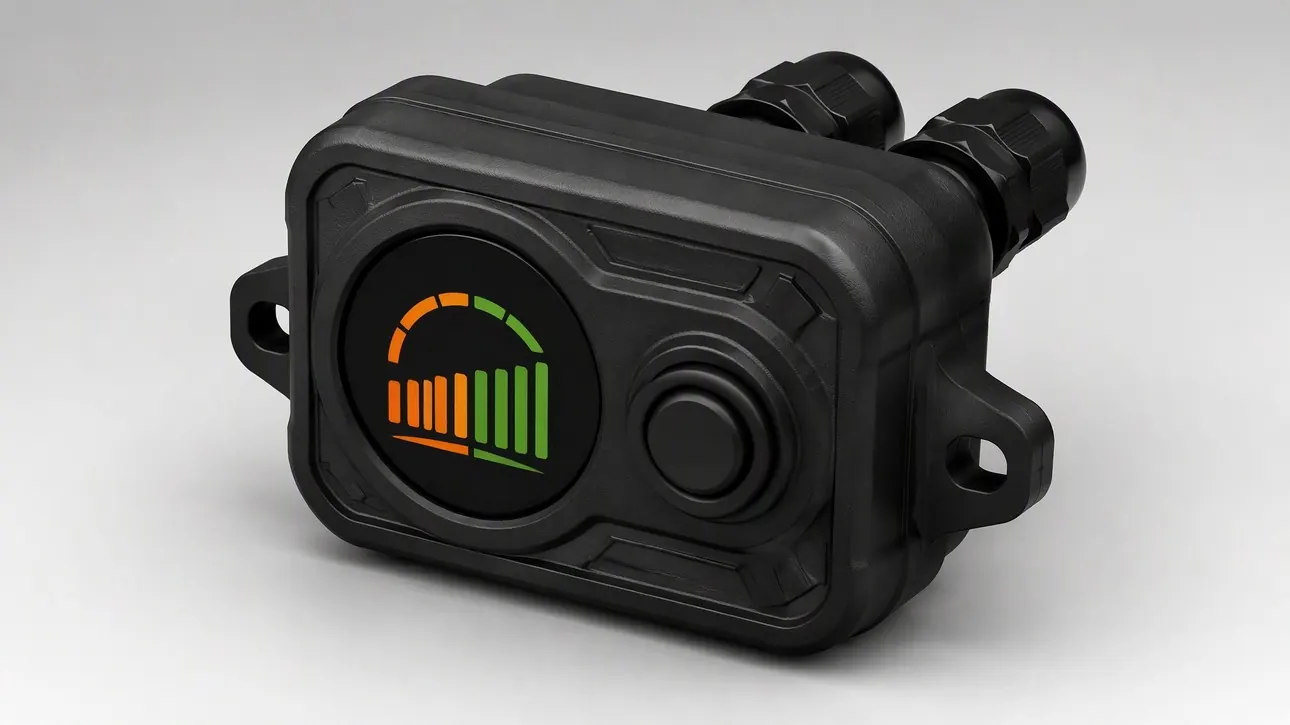
Control unit
Threshold table with a green and orange indicator showing the current level at a glance.
Speed sensing
Truck speed from a wheel encoder or over CAN.
Actuation
A throttle servo on diesel trucks, a traction controller command on electric trucks.
Feedback
Indicator display and staged audible warning.
Power and connection
12–48 V; plug-and-play connectors that need no cutting or splicing.
Components on site
The sensor and control unit are fitted plug-and-play, without affecting the truck warranty.

Integration with the solution family
High-Bay Warehouses
The setting where travelling without lowering the forks is most common.
Detection Layer
Pedestrian and truck detection and fork height violations come together in a single record.
Warning Layer
The moment a limit is applied, nearby pedestrians are informed as well.
Authorisation Layer
The truck starts only for an authorised operator, so untrained use is blocked.
Explore the Solution Slide by Slide
The full product presentation we shared on LinkedIn. Scroll through it, and click a slide to enlarge.


The higher the load, the lower the speed.
- Fast travel with raised forks is prevented.
- Tip-over and load-drop accidents fall.
- Damage to racking, goods and equipment goes down.
- Limits are set for each site using locked parameters.
As an authorised STILL Arser dealer and service partner we run the whole process from a single point of contact: site analysis, installation, operator training and after-sales support.